

As a seasoned supplier of Composite Geomembrane, I've witnessed firsthand the growing importance of understanding the anti - ultraviolet (UV) ability of this remarkable material. In various engineering projects, from landfill liners to water reservoirs, the long - term performance of composite geomembrane is often closely related to its ability to withstand the harsh effects of UV radiation.
Understanding Ultraviolet Radiation and Its Impact on Materials
Ultraviolet radiation is a part of the electromagnetic spectrum with wavelengths shorter than visible light. It is divided into three categories: UVA (320 - 400 nm), UVB (280 - 320 nm), and UVC (100 - 280 nm). UVC is mostly absorbed by the Earth's ozone layer, but UVA and UVB reach the Earth's surface and can cause significant damage to many materials.
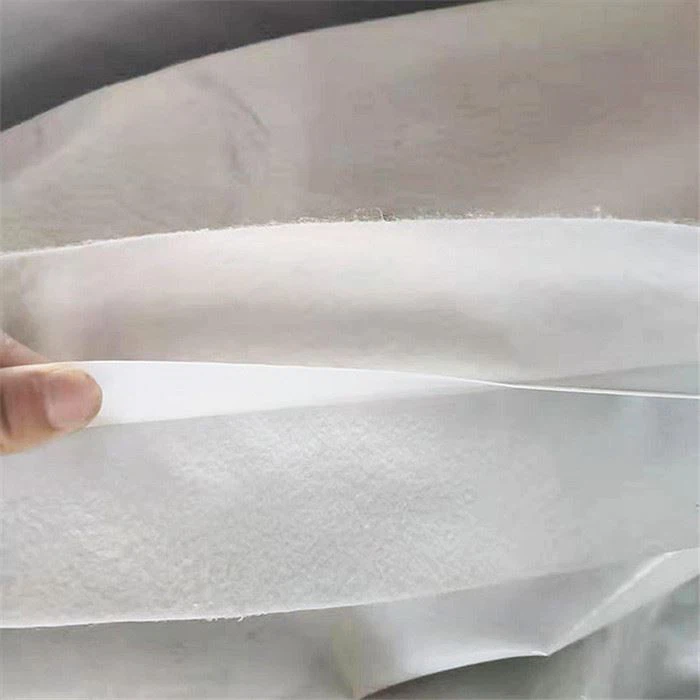

When composite geomembrane is exposed to UV radiation, several degradation processes can occur. The energy from UV photons can break the chemical bonds in the polymer matrix of the geomembrane. This leads to a reduction in the material's mechanical properties, such as tensile strength and elongation at break. Over time, the surface of the geomembrane may become brittle, crack, or lose its flexibility. These changes can compromise the integrity of the geomembrane, leading to potential leaks in containment systems or reduced performance in other applications.
Factors Affecting the Anti - Ultraviolet Ability of Composite Geomembrane
Polymer Type
The type of polymer used in the composite geomembrane plays a crucial role in its anti - UV ability. For example, high - density polyethylene (HDPE) is a commonly used polymer in geomembranes. HDPE has a relatively good inherent resistance to UV radiation due to its stable molecular structure. However, it still requires the addition of UV stabilizers to enhance its long - term performance under sunlight exposure. On the other hand, some polymers may be more sensitive to UV degradation and require more advanced protection mechanisms.
UV Stabilizers
UV stabilizers are chemical additives that are incorporated into the composite geomembrane during the manufacturing process. There are two main types of UV stabilizers: absorbers and quenchers. UV absorbers work by absorbing the UV radiation and converting it into heat, which is then dissipated. Quenchers, on the other hand, react with the excited molecules in the polymer matrix caused by UV radiation and return them to their ground state, preventing further degradation.
The effectiveness of UV stabilizers depends on their concentration, type, and compatibility with the polymer. A well - formulated composite geomembrane with the right combination of UV stabilizers can significantly improve its anti - UV ability.
Thickness of the Geomembrane
The thickness of the composite geomembrane also affects its anti - UV performance. A thicker geomembrane provides more material to absorb and dissipate the UV radiation. This means that the inner layers of the geomembrane are better protected from the direct effects of UV radiation compared to a thinner one. However, increasing the thickness also comes with increased costs and potential installation challenges.
Surface Protection
In some cases, the surface of the composite geomembrane can be protected to enhance its anti - UV ability. For example, a non - woven geotextile can be laminated to the geomembrane surface. The non - woven geotextile acts as a physical barrier, reducing the amount of UV radiation that reaches the geomembrane. You can learn more about Composite Geomembrane with Nonwoven Geotextile. Additionally, some geomembranes are coated with a protective layer that has high UV resistance.
Testing the Anti - Ultraviolet Ability of Composite Geomembrane
To accurately assess the anti - UV ability of composite geomembrane, various testing methods are available. One common method is the accelerated weathering test. In this test, samples of the geomembrane are exposed to high - intensity UV radiation in a controlled environment, along with other environmental factors such as temperature and humidity. The samples are then periodically tested for changes in their mechanical properties and appearance.
Another method is the natural exposure test. In this approach, geomembrane samples are installed outdoors and exposed to natural sunlight for an extended period. This method provides a more realistic assessment of the material's long - term performance under actual environmental conditions. However, it is time - consuming and can be affected by local weather variations.
Applications and the Need for Anti - Ultraviolet Ability
Landfill Liners
In landfill applications, composite geomembranes are used as liners to prevent the leakage of leachate into the surrounding soil and groundwater. Since landfills are often exposed to sunlight for long periods, the geomembrane must have good anti - UV ability to maintain its integrity over the landfill's lifespan. A failure in the liner due to UV degradation can lead to serious environmental pollution.
Water Reservoirs
Composite geomembranes are also used in water reservoirs to prevent seepage. In open - air water reservoirs, the geomembrane is constantly exposed to sunlight. A geomembrane with poor anti - UV ability may develop cracks or holes over time, leading to water loss and potential damage to the reservoir structure.
Mining Applications
In the mining industry, composite geomembranes are used for tailings ponds and heap leach pads. These applications require the geomembrane to withstand harsh environmental conditions, including UV radiation. The anti - UV ability of the geomembrane is essential to ensure the long - term stability and safety of these mining facilities. You can find more information about Geocomposite Membrane and Geomembrane and Geotextile which are often used in these applications.
Our Company's Approach to Enhancing Anti - Ultraviolet Ability
As a supplier of composite geomembrane, we are committed to providing products with excellent anti - UV ability. We carefully select high - quality polymers and use advanced UV stabilizers in our manufacturing process. Our R & D team continuously conducts research to optimize the formulation of our geomembranes, ensuring that they meet or exceed industry standards for UV resistance.
We also offer a range of surface protection options for our composite geomembranes. Whether it's a non - woven geotextile lamination or a special protective coating, we can customize the product according to the specific requirements of our customers. Our products have been tested in both accelerated weathering and natural exposure tests, and the results have demonstrated their outstanding long - term performance under UV radiation.
Conclusion
The anti - ultraviolet ability of composite geomembrane is a critical factor in its long - term performance and reliability in various applications. Understanding the factors that affect this ability, such as polymer type, UV stabilizers, thickness, and surface protection, is essential for selecting the right geomembrane for a specific project.
If you are in need of composite geomembrane with excellent anti - UV ability for your project, we invite you to contact us for more information and to discuss your specific requirements. Our team of experts is ready to assist you in choosing the most suitable product and providing professional technical support.
References
- ASTM D5229/D5229M - 17, Standard Test Method for Determining the Long - Term Oxidative Resistance of Geosynthetics by Measuring the Oxidation Induction Time (OIT) Using Differential Scanning Calorimetry (DSC).
- Koerner, R. M. (2012). Designing with Geosynthetics. Pearson.
- Rowe, R. K. (2005). Geosynthetics in geotechnical and geoenvironmental engineering. CRC Press.