

Why Choose Us?
Quality Assurance
All of our geogrid products are CE-certificate,and manufactured at ISO 9001 certified manufacturing soil reinforcement geogrids consistently meets demanding QA/QC requirements.Our Products are tested to rigorous ASTM standards both in-house.We have established a national-standard laboratory for in-house quality control. We built a strict quality control system in all aspects from raw materials testing and production processes to final product quality testing.
Professional Service
As a leading manufacturer of geosynthetics materials, we have been exported geogrid to more than 50 countries and regions abroad. On this basis, we continue to develop and provide geosynthetics products with excellent performance and professional technical services.
One-stop Geosynthetics Products
We provide one-stop geosynthetics products and solutions to global customers. Feicheng Lianyi Geosynthetics has supplied a wide range of effective and state-of-the-art Geomembranes, Geotextiles, Geocells, Geogrids to more than 50 countries and regions abroa.
Short Delivery Time
Now we own 50 sets of facilities,include 21 sets of Fiberglass Geogrid & Polyester Geogrid Production lines (include different widths of 4 meters,5meters,6meters), 9 sets of PP biaxial Geogrid Production lines (include different widths of 4 meters,5meters,6meters), 3 sets of PP & HDPE Uniaxial Geogrid Production lines, 4 sets of Steel-Plasti ccomposite Geogrid Production lines,3 sets of needlepunched Non woven geotextile & Spunbonded Nonwoven fabric ,2 Sets of Composite production lines and some production lines for Woven geotextile,HDPE Geomembrane,HDPE Geocell,Geonet etc,intotal 50 sets of machines currently,that's definitely the largest scale in China.
-
![Road Construction HDPE Geocell]() Road Construction HDPE GeocellRoad Construction HDPE Geocell have relatively low tensile strength and high creep.read more
-
![Slope Protection Geocell]() Slope Protection GeocellHDPE geocell is a versatile and effective solution for soil reinforcement and erosion control, providing a wide range of benefits in various industries and applications.read more
-
![HDPE Geocell Grids]() HDPE Geocell GridsHDPE Geocell is made of eco-friendly HDPE material, which is lightweight, wear-resistant, and anti-oxidativeread more
-
![HDPE GEOWEB Geocell]() HDPE GEOWEB GeocellGeocells are proven to be an effective solution to common geotechnical problems, providing a cost-effective and sustainable solution for infrastructure and construction projects.read more
-
![Perforated Geocell]() Perforated GeocellWe supply high quality perforated Geocell is widely used in construction for erosion control, soil stabilizationread more
-
![HDPE Geoweb]() HDPE GeowebHDPE Geoweb is made from the most reliable and proven material high density polyethylene (HDPE)read more


What is HDPE Geocell?
HDPE geocell is a cellular confinement system made from high-density polyethylene (HDPE) material. It consists of interconnected cells that form a honeycomb-like structure, providing reinforcement and stability to soil in various civil engineering applications, including road construction.
Advantages of HDPE Geocell
Structure
Geocells are three-dimensional cellular structures made from interconnected panels or cells that confine and stabilize soil. HDPE geocells have a strong, rigid structure that can withstand heavy loads and distribute weight more evenly compared to traditional stabilization methods like gravel, sand, or geotextiles.
Versatility
They can be used in various applications such as erosion control, slope protection, retaining walls, and load support for roads and railways. Their versatility allows engineers to use them in different soil conditions and terrains.
Increased Load-Bearing Capacity
Geocells improve load-bearing capacity by spreading the load over a larger area. When filled with materials like soil, aggregate, or concrete, they create a stable foundation that can support heavy loads.
Erosion Control
Geocells help prevent soil erosion by confining soil particles within the cells. This prevents them from being washed away by water runoff or wind.
Ease of Installation
They are relatively easy to install and require minimal specialized equipment. This can reduce construction time and costs compared to other conventional stabilization methods.
Environmental Benefits
HDPE geocells are often made from recycled materials, making them environmentally friendly. Additionally, their use can reduce the need for excavation and disposal of soil, minimizing environmental impact.
Application of HDPE Geocell
Landscape Architecture
Protecting plants and soil against erosion in landscape architecture entails the use of specialist technologies such as HDPE geocells. HDPE geocell grids will reduce undesired runoff or groundwater flow while also preventing the construction of erosion channels that endanger the landscape. Other advantages include the preservation of riverbeds and tree roots, the stabilization of ground, soil, and channel walls, and the prevention of erosion in greenbelts, slopes, and vegetation.
Road Construction
About four-fifths of the world's roads are unpaved gravel access roads. These roads are frequently built over shaky ground, such as vast clay, peat bogs, or sand. These materials will disintegrate if correct technology is not in place, threatening the safety, stability, and lifespan of the highways. HDPE geocells offer the rigidity and creep resistance required for soft soil road stabilization. They prevent the clay from shrinking and cracking, sandy soils from lateral dispersion and strain, and all soft soils from subgrade reinforcement.
Load Platform
HDPE geocells are an excellent method for constructing semi-rigid platforms over weak soils and in regions where digging is restricted. The load capacity of grade slabs, foundation spread, and strip footings is increased by using HDPE geocell grids. Cellular confinement systems may also be used to minimize pavement sections in laydown areas, parking lots, and highways.
Retaining Wall, Embankment, and Levees Reinforcement
HDPE geocells are an excellent solution for erosion control on embankments and slopes. They also prevent water channelization, pond linings, or any other structure that needs to be installed safely in soil with high levels of risk due to natural factors such as slope stability problems.
Green Roofs and Walls
Rooftop flower and vegetable gardens, for example, are becoming increasingly popular in cities. HDPE geocells, with their expanded honeycomb construction that retains soil and enhances structural stability, make these places conceivable. Green walls are also popular in certain houses and companies, thanks to HDPE geocell grids.
HDPE Geocell Installation: Best Practices and Techniques
Site Preparation
Proper site preparation is the first and essential step for the successful installation of HDPE geocells. Before installation, the site should be cleared of any debris, rocks, and vegetation. The soil should also be excavated to the required depth, and the surface should be leveled properly to ensure a firm and steady base. The use of geotextile fabric on the soil surface will further improve soil stability and prevent erosion.
Geocell Unfolding and Placement
Once you prepare the site properly, unfold the HDPE geocell panels and place them on the soil surface. Make sure that the panels should be placed in the correct orientation, with the cells perpendicular to the direction of the anticipated load. Proper alignment of the panels is crucial to ensure a continuous surface. Don't forget to secure the panels in place by using metal stakes, earth anchors, or other fastening methods.
Connection and Expansion
To ensure optimal performance, the proper connection and expansion of HDPE geocells are mandatory. The panels should be connected using the manufacturer's recommended methods, which may include heat fusion, mechanical connections, or adhesive bonding. The panels should also be expanded to the required height by using manual or mechanical expansion techniques.
Fill Material Placement
The placement of fill material within the HDPE geocells is one of the most critical steps in the installation process. The fill material should be placed in lifts, with each lift compacted before the next one is placed. Make sure that the fill material is free of debris, rocks, and other harmful materials that possibly damage the HDPE geocell panels. It's also essential to ensure that the fill material is evenly distributed throughout the geocell structure to prevent voids and uneven settling.
Quality Control and Inspection
Quality control and inspection are the prerequisites to ensure the successful installation of HDPE geocells. It would be better if a qualified inspector supervises the installation process to ensure that each step is performed correctly and all quality standards are met. Any issues that arise during installation, such as damaged panels or improper connections, should be addressed promptly to prevent further issues down the line.
Maintenance and Repair
Proper maintenance and repair help to extend the lifespan of HDPE geocells and ensure their optimal performance. The geocell surface should be inspected regularly for any kind of damage, such as cracks or punctures, and any issues should be repaired immediately. The fill material should also be inspected regularly to ensure that it is evenly distributed and properly compacted.
Ground Improvement with HDPE Geocells
Cells made of HDPE have entirely changed the game regarding ground improvement. Geocells efficiently distribute loads, decreasing settlement and enhancing soil carrying capacity by containing and stabilizing the fill material. The three-dimensional structure prevents dirt lateral movement by providing lateral reinforcement and improves overall stability. Geocells also encourage effective stress distribution, lowering the danger of foundation failure and differential settling. It doesn't matter if soft soils, unstable subgrades, or uneven terrain—HDPE geocells provide a dependable ground improvement solution that ensures a strong foundation for various construction projects.
Enhancing Foundation Support
Foundations are critical in supporting structures, and HDPE geocells can significantly enhance their steadiness. Geocells improve overall structural integrity by increasing bearing capacity, lowering settling, and fortifying the soil around and beneath foundations. Reduced foundation movement is possible thanks to the enhanced lateral support provided by the constrained fill material inside the geocells. This is useful in difficult soil situations, such as expansive or loose soils. By effectively reducing the risk of differential settlement, HDPE geocells enable the development of more robust and long-lasting foundations.
Installation and Versatility
Because of their simplicity and adaptability, HDPE geocells are a popular option for foundation support and ground improvement. Geocells are lightweight, making moving and handling them on building sites simple. Interlocking cells and the modular structure allow for quick and effective installation, which reduces labor costs and time. Geocells can be easily modified to meet project specifications, including load-bearing platforms, retaining walls, or slope stabilization. HDPE geocells are a flexible and adaptable option for various building applications because of their adaptability.
Environmental and Economic Benefits
Utilizing HDPE geocells for foundation support and ground improvement has significant environmental and financial advantages. Geocells lessen the need for extensive excavation and use of conventional building materials, reducing the environmental impact. Geocells prolong the life of structures, lowering maintenance costs and the need for further repairs by enhancing soil conditions and preventing foundation failure. Geocells' lightweight and modular design maximizes construction efficiency, leading to cost savings and accelerated project schedules.
Key Features of HDPE Geocells
Retractable Structure
In the center of HDPE Geocell is its retractable nature that enables ease of transportation and storage. This innovative design provides installation flexibility, allowing adjustment to the changing nature of construction sites.
Chemical Stability
The exceptional chemical stability of the Geocell erosion control makes it corrosion and degradation-resistant. This feature provides a long life, an extra layer of longevity to the roads it reinforces.
Flexibility
The characteristic of HDPE Geocell is its flexibility which lets it adapt to the topography. This adaptability makes installation easier and increases its effectiveness in various settings.
High Lateral Limits
An outstanding characteristic of HDPE Geocell is its lateral confinement. This makes the road stable in sloping areas and prevents soil erosion because this is one of the most common challenges encountered during construction. So, this system is best for Geocell grids for slope protection.
Anti-Slip Properties
The HDPE Geocell surface has several anti-slip features, providing traction for various vehicles to avoid accidents. This safety factor is an important consideration in road construction projects.
Enhanced Load Distribution
HDPE Geocell is a superior solution for load distribution, relieving the underlying soil of undue stress. Not only does this improve the load-bearing capacity of roads but also reduces soil modification.
Ease of Transportation and Construction
Its lightweight and easy installation leads to quicker building times.
Factors Affecting HDPE Geocell Performance and Pricing
Cellular Structure
The design and dimensions of HDPE geocells, including cell size, height, and configuration, influence their performance and load-bearing capacity. Higher-density geocells with larger cell dimensions generally command higher prices due to increased material consumption and manufacturing complexity.
Material Quality
The quality of HDPE material used in geocell manufacturing directly impacts its durability, resistance to environmental factors, and long-term performance. High-quality virgin resins and additives result in superior geocell products with enhanced strength and longevity.
Geocell Thickness
The thickness of HDPE geocell walls and reinforcement ribs affects its structural integrity and ability to withstand applied loads. Thicker geocells offer greater stability and load-bearing capacity but may incur higher production costs.
Manufacturing Standards and Certification
Geocell manufacturers adhering to international quality standards and certification protocols ensure product consistency, reliability, and compliance with project specifications. Certified geocell products may command premium prices due to their guaranteed performance and quality assurance.
In terms of function, HDPE geocells are what’s called a cellular confinement system. This means that the structure holds all the infill materials in place and distributes any weight or pressure from above across the infill and the cell walls. HDPE geocells are three-dimensional cellular structures, which means that the system distributes pressure laterally and vertically across the area. Practically, this means HDPE geocell is perfect for intense load support applications. For example, take a road that will support commercial vehicles, which are heavy and usually don’t have great weight distribution. HDPE geocell will stabilize that road and distribute that heavy weight across a larger area.

How Does HDPE Geocell Contribute to the Health and Safety of Horses in Paddocks?
Ground Stability
HDPE geocell improves ground stability, creating a firmer surface that reduces the risk of horses slipping, falling, or sustaining injuries due to uneven ground.
Mud Reduction
It effectively drains and minimizes mud accumulation in paddocks. Excessive mud can lead to hoof problems such as thrush and other health issues in horses.
Erosion Control
By preventing soil erosion, HDPE geocell technology ensures that paddocks maintain their structural integrity, reducing the chances of holes or dangerous areas that could harm horses.
Improved Hygiene
The enhanced drainage and reduced mud not only benefit the horse's health by preventing hoof diseases but also create a cleaner and more hygienic environment, reducing the risk of infections.
Durable Surface
HDPE geocell creates a durable and resilient surface that withstands the heavy traffic of horses, leading to a longer-lasting paddock area without the need for frequent repairs.
Environmental Benefits
This technology is environmentally friendly, promoting natural grass growth which can contribute to a healthier diet for horses if they graze in their paddocks.
What Is the Difference Between a HDPE Geocell and a HDPE Geogrid?
While both aid in soil stabilization, they differ in structure and application:
Structure: HDPE geocells consist of interconnected cells resembling a honeycomb, confining materials within them. HDPE geogrids are flat, grid-like sheets made of polymeric materials.
Functionality: HDPE geocells primarily confine materials like gravel or soil, enhancing load distribution and erosion control. HDPE geogrids provide reinforcement by distributing loads over a wider area and preventing soil movement.
Reduced Material Usage: Geocells reduce the need for extensive soil or aggregate fill, making projects more cost-effective and environmentally friendly.
Faster Construction: The ease of installation and quick deployment of geocells results in faster construction, reducing labor costs and project completion times.
Long-Term Stability: Geocells improve the longevity and stability of construction projects, reducing the need for maintenance and repairs.
Versatility: HDPE Geocell can be used in a variety of applications, simplifying project planning and reducing the need for multiple materials.
What Are the Key Considerations When Implementing HDPE Geocells in Railway Projects?
Geocell Selection
Choosing the right HDPE geocell type, material, and size is crucial to meeting the specific project requirements and load-bearing capacity.
Installation
Proper installation techniques are vital to ensure that the HDPE geocells are securely placed and connected and that the infill materials are correctly compacted.
Monitoring
Regular inspection and monitoring of the geocell-reinforced railway sections are necessary to detect any issues promptly and ensure their long-term performance.
Compatibility
Geocell technology should be compatible with other railway components like ballast and track systems to ensure the seamless operation of the railway network.
Our Certifications
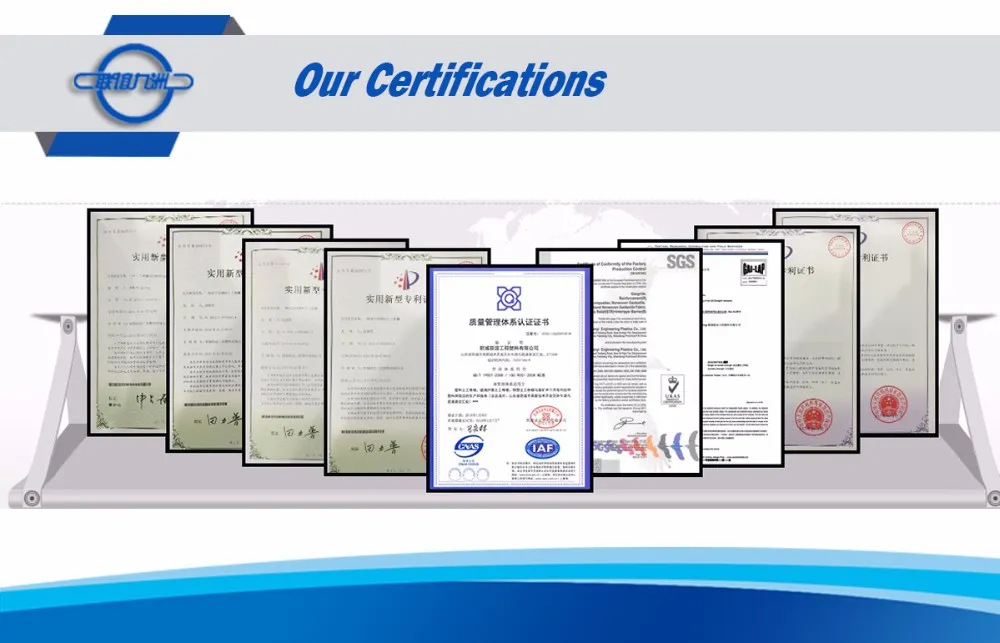
ISO 9001 ,CE certificate and GB/T24001/ISO14001,GB/T24001/ISO14001
Our Factory
Feicheng Lianyi Engineering Plastics Co., Ltd has an excellent team with strong professional and technical capabilities, strong scientific management capabilities, and strong market development capabilities, talents who are good at operation and management, and a young, professional, energetic, pioneering and enterprising team. Enterprises bring infinite vitality. We attaches great importance to product promotion and brand building, and has established a wide range of win-win cooperation relationships.
Ultimate FAQ Guide to Composite Geogrid
We're known as one of the most professional hdpe geocell manufacturers and suppliers in China, featured by quality products and good service. Please feel free to buy hdpe geocell at competitive price from our factory.
HDPE Geonet, Road Construction HDPE Geocell, HDPE Geocell