

Why Choose Us?
Quality Assurance
All of our geogrid products are CE-certificate,and manufactured at ISO 9001 certified manufacturing soil reinforcement geogrids consistently meets demanding QA/QC requirements.Our Products are tested to rigorous ASTM standards both in-house.We have established a national-standard laboratory for in-house quality control. We built a strict quality control system in all aspects from raw materials testing and production processes to final product quality testing.
Professional Service
As a leading manufacturer of geosynthetics materials, we have been exported geogrid to more than 50 countries and regions abroad. On this basis, we continue to develop and provide geosynthetics products with excellent performance and professional technical services.
One-stop Geosynthetics Products
We provide one-stop geosynthetics products and solutions to global customers. Feicheng Lianyi Geosynthetics has supplied a wide range of effective and state-of-the-art Geomembranes, Geotextiles, Geocells, Geogrids to more than 50 countries and regions abroa.
Short Delivery Time
Now we own 50 sets of facilities,include 21 sets of Fiberglass Geogrid & Polyester Geogrid Production lines (include different widths of 4 meters,5meters,6meters), 9 sets of PP biaxial Geogrid Production lines (include different widths of 4 meters,5meters,6meters), 3 sets of PP & HDPE Uniaxial Geogrid Production lines, 4 sets of Steel-Plasti ccomposite Geogrid Production lines,3 sets of needlepunched Non woven geotextile & Spunbonded Nonwoven fabric ,2 Sets of Composite production lines and some production lines for Woven geotextile,HDPE Geomembrane,HDPE Geocell,Geonet etc,intotal 50 sets of machines currently,that's definitely the largest scale in China.
-
![Tri Planar Geonet Composite with Geotextile]() Tri Planar Geonet Composite with GeotextileAre made of a unique tri-dmension geonet adhibited geotextile on both sides.it has the property of geotextile (filtration function ) and geonet (drainage and protection )read more
Tri Planar Geonet Composite with GeotextileAre made of a unique tri-dmension geonet adhibited geotextile on both sides.it has the property of geotextile (filtration function ) and geonet (drainage and protection )read more -
![Three Dimensional Composite Drainage Network]() Three Dimensional Composite Drainage NetworkTri Planar Geonet Composite With Geotextile consist of a geonet heat bonded with a nonwoven needle-punched geotextileread more
Three Dimensional Composite Drainage NetworkTri Planar Geonet Composite With Geotextile consist of a geonet heat bonded with a nonwoven needle-punched geotextileread more -
![Two Dimensional Composite Drainage Geonet]() Two Dimensional Composite Drainage GeonetTwo - Dimensional Geocomposite HDPE Geonet Features Its anti-compression capacity is much larger than common geonet for drainage.read more
Two Dimensional Composite Drainage GeonetTwo - Dimensional Geocomposite HDPE Geonet Features Its anti-compression capacity is much larger than common geonet for drainage.read more


Drainage geocomposites typically comprise a drainage core with a Polypropylene (PP) geotextile laminated to one or both sides, and are typically characterized by their core type. They are a lightweight, cost-effective and have equivalent or better drainage capacity compared to more traditional granular drainage solutions wrapped in a geotextile or encased within porous concrete.
Enhanced performance
Drainage geocomposites are engineered materials designed to provide specific functions and properties. By combining multiple geosynthetic components, they offer enhanced performance compared to traditional construction materials. drainage geocomposites can improve filtration, drainage, separation, reinforcement, and other geotechnical functions, leading to more efficient and durable structures.
Versatility
Drainage geocomposites can be tailored to meet the requirements of various applications. They offer flexibility in terms of composition, thickness, and configuration, allowing engineers to select the most suitable drainage geocomposite for a specific project. This versatility makes them applicable in a wide range of geotechnical and civil engineering applications.
Cost savings
Drainage geocomposites can lead to cost savings in construction projects. By providing multiple functions in a single material, they eliminate the need for using multiple individual products. This simplifies the construction process, reduces labor, and saves installation time and costs. They can also help mitigate long-term maintenance expenses by improving the durability and performance of structures.
Environmental benefits
Drainage geocomposites can contribute to environmentally friendly construction practices. For example, drainage geocomposite drainage systems help manage stormwater runoff, reducing the impact on natural waterways and preventing soil erosion. Additionally, they can be made from recycled materials, promoting sustainability and reducing the demand for virgin resources.
Improved construction efficiency
Drainage geocomposites are lightweight and easy to handle, making them convenient for installation. They can be prefabricated or factory-assembled, allowing for faster and more efficient construction. They also offer consistent and predictable performance, reducing the risk of construction errors and ensuring the desired engineering outcomes.
Longevity and durability
Drainage geocomposites are designed to withstand harsh environmental conditions and exhibit long-term durability. They are resistant to chemical degradation, biological attack, and uv radiation. By providing protection and reinforcement to underlying materials, drainage geocomposites help extend the service life of structures.
Improved geotechnical properties
Drainage geocomposites can significantly improve the geotechnical properties of soils. They enhance soil stability, increase load-bearing capacity, and improve soil drainage characteristics.
Application of Drainage Geocomposite
Retaining structures
Drainage geocomposites dissipate pore water pressures and help maintain the stability and integrity of the structural fill in both concrete and soilreinforced retaining structures.
Road, railway, and airport applications
Wick/ trench drains, which can substitute subsoil drains, are commonly used in road, railway and airport projects. Drainage geocomposites are utilised in these applications to provide efficient water drainage, ensuring optimal performance and durability.
Horizontal drainage and anti-capillary layers in embankments composed of fine and cohesive fills
Drainage geocomposites facilitate the removal of excess water from the embankment, preventing water accumulation and potential instability. Additionally, they can act as anti-capillary layers, preventing the upward movement of water through the embankment.
Landfills
Drainage geocomposites are utilised for leachate collection and gas ventilation, aiding in the proper management of landfill fluids and gases or leakage detection. Additionally, these geocomposites serve as a protective layer, safeguarding geomembranes against puncture or damage.
Roofing and deck pavement applications
Drainage geocomposites facilitate the efficient removal of water from surfaces, reducing the risk of water accumulation and moisturerelated damage.
Drainage of sports fields
Drainage geocomposites effectively manage water. They help maintain optimal field conditions, prevent waterlogging and ensure consistent playability.
Water flow in a drainage geocomposite is known as in-plane flow and is measured in a laboratory. These tests place the geocomposite under a constant pressure and measure the water flow at a constant hydraulic gradient. Multiple tests at varying pressures and hydraulic gradients can be used to build up a flow chart to understand flow behaviour in different conditions. The test result is usually reported in litres per second per metre width (l/m·s). One of the key parameters of this test is how the pressure is applied to the geocomposite. This is because when a geocomposite is installed adjacent to a deformable medium, such as soil, the geotextile may be pushed into the HDPE core which may throttle flow. The test methods allow the use of either hard or soft platens. The soft platens simulate installation in soil or similar conditions and it is important to ensure that test results that are used for design are those that best reflect the conditions on site in which the geocomposite is to be used.
Components of Drainage Geocomposite
Geotextiles
These are permeable fabrics made from synthetic materials such as polypropylene or polyester. Geotextiles can be woven or non-woven and are used for functions like separation, filtration, and erosion control.
Geomembranes
These are impermeable sheets made of synthetic materials like high-density polyethylene (HDPE) or polyvinyl chloride (PVC). Geomembranes act as barriers to prevent the movement of fluids or gases and are commonly used for containment applications like lining landfills or ponds.
Geogrids
These are grid-like structures made from polymer materials, typically high-strength polymers like polyester or polyethylene. Geogrids provide reinforcement to soils and are used to enhance the stability and load-bearing capacity of foundations, slopes, and retaining walls.
Geonets
These are three-dimensional structures consisting of intersecting rib-like strands or tubes. Geonets provide a drainage pathway by allowing the flow of liquids or gases through their open structure. They are commonly used in applications requiring drainage, such as landfill leachate collection systems or gas venting systems.
Drainage geocomposites can be made from different types of polymers, however the most popular include high density polyethylene (HDPE), polypropylene (PP) and polyester (PET). The polymers selected are highly resistant to biological and chemical degradation. Manufacturers incorporate additives or modifiers to the polymer blend to impart desirable characteristics such as weathering resistance and uv resistance. Other polymers, such as aramids or polyvinyl alcohol (PVA) are used for highly specialised applications requiring very high strength.

Important Performance Properties That Should Be Assessed at the Time of the Design and Selection of Drainage Geocomposites
Flexible or collapsible
Drainage geonets may show high resistance to compression in the short term and might be prone to a sudden collapse in case the loads are maintained for a long period. It is therefore essential to evaluate, at the design level, in case the geonets core behaves as flexible or collapsible for the specific field conditions, i.e., utilized load, slope gradient, and design life. The drainage volume of geocomposites is directly equivalent to the thickness of the geonets core. The reference value of the flow rate should therefore be determined just when the utilized loads and the geocomposites have reached an equilibrium and without more reduction of thickness and drainage volume. While flexible drainage materials achieve equilibrium in just a few hours, it is tougher for collapsible drainage materials to achieve equilibrium in compression. How the reference value of the flow rate is determined will be based upon whether the geocomposites is expected to behave as flexible or collapsible.
Flow-rate factors
The overloading pressure to which drainage geocomposites may be subjected differs greatly from one application to another. This can be from 10 kPa under the coating of topsoil in a roof garden, up to 500 kPa as a leachate collection coating at the bottom of a landfill cell, or the base of a very huge embankment and mining stack leach pad (> 25m). Higher loads are possible but not frequent. A general procedure for controlling the allowable flow rate of drainage geocomposites in most applications is applying a set of reduction aspects that take into account all the ambiguity and phenomena related to material properties, weather, and other aspects that might decrease the in-plane flow volume of the geocomposites over the entire design life, but not citing to the short-term flow rate measured in the index tests.
Why Is Transmissivity a Crucial Factor in Drainage Geocomposite Design?
Efficiency of Water Flow
The primary function of a geocomposite drainage system is to facilitate the flow of water or other fluids. High transmissivity ensures efficient water flow through the system, preventing water accumulation and potential damage in the surrounding areas.
Hydraulic Performance
The transmissivity of a geocomposite determines its hydraulic performance. In applications like landfill leachate collection, road subgrade drainage, or retaining wall drainage, the ability to quickly and effectively transport water away from these structures is essential to maintain their integrity and prevent failure.
Prevention of Waterlogging and Erosion
In areas prone to high rainfall or water flow, a geocomposite with high transmissivity can prevent waterlogging and soil erosion. This is particularly important in slope stabilization and landscaping applications.
Load Bearing Capacity
In many geotechnical applications, water accumulation can lead to increased hydrostatic pressure, which can affect the stability of the structure. A geocomposite with adequate transmissivity helps in maintaining the load-bearing capacity of the soil or structure by reducing this hydrostatic pressure.
Longevity and Durability
Proper drainage is key to the longevity of geotechnical structures. Water accumulation can lead to deterioration of materials and structural components. By ensuring effective drainage, a geocomposite with high transmissivity can extend the life of these structures.
Adaptability to Various Conditions
Different geotechnical applications may present unique challenges, such as varying soil types, fluctuating water tables, or chemical exposure. A geocomposite with appropriate transmissivity can be selected to meet these specific conditions, ensuring the effectiveness of the drainage system.
Cost-Effectiveness
Efficient drainage systems reduce the need for maintenance and repairs. By choosing a geocomposite with the right transmissivity, long-term costs associated with water damage and system failure can be significantly reduced.
Drainage geocomposite extends the life of a retaining wall by efficiently managing water flow and reducing hydrostatic pressure against the structure. It acts as a barrier, preventing soil erosion, waterlogging, and freeze-thaw cycles that can weaken the wall over time. By maintaining a dry and stable environment behind the wall, geocomposite drains mitigate the risks of cracking, bulging, or collapsing. Additionally, they are resistant to clogging and biological degradation, ensuring long-term performance and less need for maintenance or repairs.
Geocomposite drainage retaining walls represent a significant advancement in engineering and construction, offering a robust solution for managing hydrostatic pressure and ensuring the longevity of structures. By understanding the role and benefits of geocomposite drains, selecting the appropriate drainage system, and recognizing the importance of drainage in retaining wall construction, engineers and builders can enhance the stability, efficiency, and durability of their projects. Whether in residential landscaping or large-scale civil engineering, incorporating geocomposite drainage systems is a wise investment in the future of infrastructure.
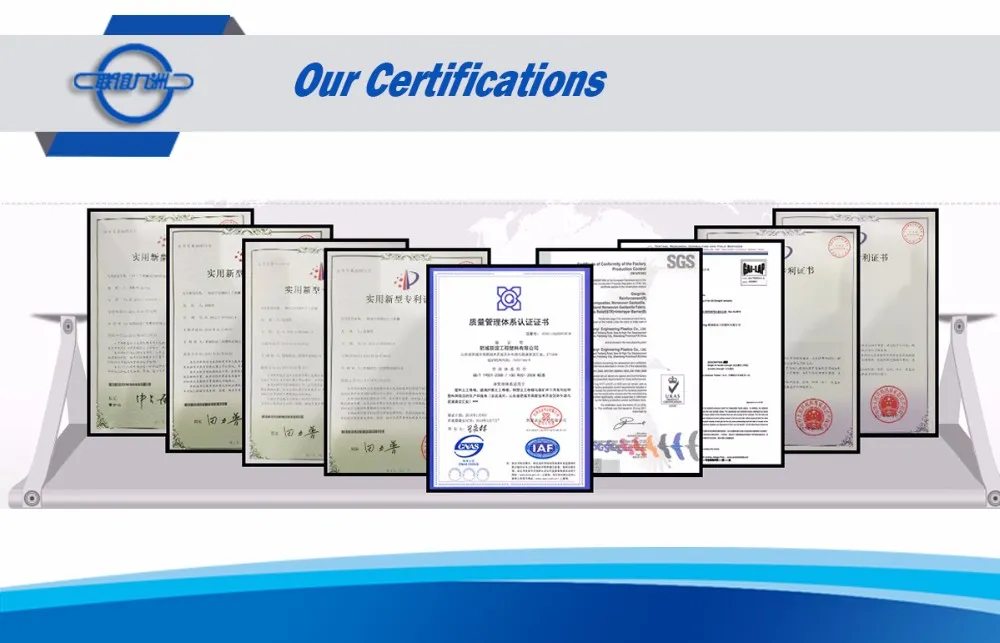
Our Certifications
ISO 9001 ,CE certificate and GB/T24001/ISO14001,GB/T24001/ISO14001
Our Factory
Feicheng Lianyi Engineering Plastics Co., Ltd has an excellent team with strong professional and technical capabilities, strong scientific management capabilities, and strong market development capabilities, talents who are good at operation and management, and a young, professional, energetic, pioneering and enterprising team. Enterprises bring infinite vitality. We attaches great importance to product promotion and brand building, and has established a wide range of win-win cooperation relationships.
Ultimate FAQ Guide to Drainage Geocomposite
We're known as one of the most professional drainage geocomposite manufacturers and suppliers in China, featured by quality products and good service. Please feel free to buy drainage geocomposite at competitive price from our factory.
Three Dimensional Composite Drainage Network, Tri Planar Geonet Composite With Geotextile, Two Dimensional Composite Drainage Geonet