

Hey there! As a supplier of Drainage Geocomposite, I've seen my fair share of issues that customers run into. In this blog, I'm gonna talk about some of the common problems with Drainage Geocomposite.
1. Clogging
One of the biggest headaches with drainage geocomposites is clogging. Over time, dirt, sediment, and other fine particles can get trapped in the geotextile layer or the drainage core. This reduces the overall drainage capacity, which is a huge no - no since the main job of the drainage geocomposite is to move water efficiently.
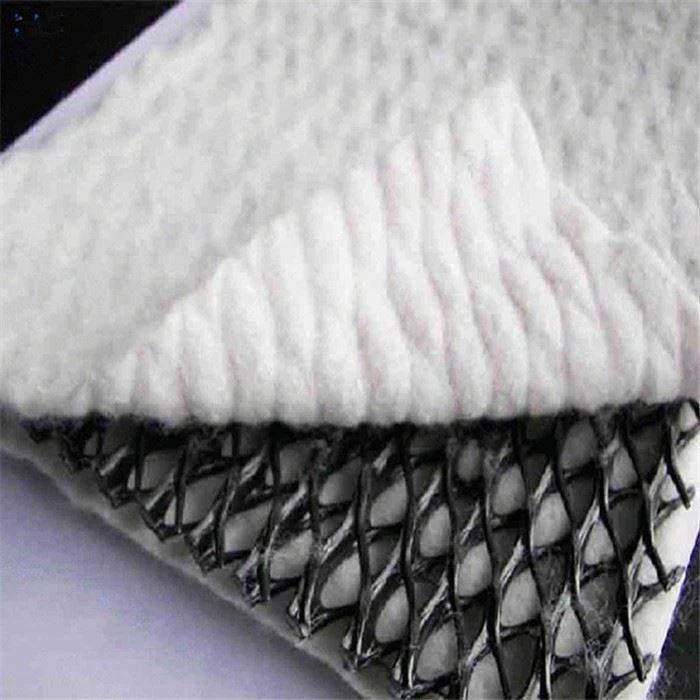

For example, in a construction site where there's a lot of soil disturbance, the soil particles can easily be washed into the geocomposite. If the particles are too fine, they can gradually build up and block the flow paths. Even though geotextiles are designed to filter out large particles while allowing water to pass through, they're not 100% foolproof.
The type of geocomposite you choose can play a role in clogging. For instance, the Tri Planar Geonet Composite with Geotextile has a unique structure that can sometimes be more resistant to clogging compared to some other types. But it still needs proper installation and maintenance to avoid this problem.
2. Installation Errors
Installation is a crucial step, and if it's not done right, it can lead to a whole bunch of problems. One common mistake is improper overlapping. When installing drainage geocomposites, they need to be overlapped correctly to ensure a continuous flow of water. If the overlap is too small, water can leak out between the seams, reducing the effectiveness of the drainage system.
Another issue is incorrect anchoring. The geocomposite needs to be firmly anchored in place, especially in areas with high water flow or where there's potential for soil movement. If it's not anchored properly, it can shift or even get washed away, leaving gaps in the drainage system.
For the Three Dimensional Composite Drainage Network, proper installation is even more critical because of its complex structure. The three - dimensional design is meant to enhance drainage, but if it's not installed as per the guidelines, it won't work as intended.
3. Compression and Damage
Drainage geocomposites can be subjected to a lot of pressure, especially in applications like landfill covers or under heavy structures. Compression can reduce the void space within the geocomposite, which in turn affects its drainage capacity.
Physical damage is also a common problem. During installation or over time, the geocomposite can get punctured by sharp objects like rocks or construction equipment. A small puncture might not seem like a big deal at first, but it can lead to larger tears and compromise the integrity of the entire system.
The Two Dimensional Composite Drainage Geonet is relatively more vulnerable to damage compared to some three - dimensional counterparts because of its flatter structure. However, it still has its own set of advantages in certain applications, but care must be taken to prevent damage.
4. Chemical and Biological Degradation
In some environments, drainage geocomposites can be exposed to chemicals or biological agents that can cause degradation. For example, in industrial areas, there might be acidic or alkaline substances in the soil or water that can react with the geocomposite materials.
Biological degradation can also occur. Microorganisms in the soil can break down the geotextile or the drainage core over time. This can weaken the geocomposite and reduce its lifespan.
To combat this, it's important to choose a geocomposite that's suitable for the specific environment. Some geocomposites are treated to be more resistant to chemical and biological attack, but it's still something to keep in mind.
5. Incompatibility with Surrounding Materials
Sometimes, the drainage geocomposite might not be compatible with the surrounding materials. For example, if it's installed in a soil that has a high clay content, the clay can stick to the geotextile and reduce its permeability.
In addition, if the geocomposite is used in conjunction with other construction materials like concrete or asphalt, there might be issues with adhesion or chemical reactions. This can lead to a less - effective drainage system and potential long - term problems.
Solutions to These Problems
Now that we've talked about the problems, let's look at some solutions. To prevent clogging, proper pre - filtration can be used. This involves installing a layer of coarser material before the geocomposite to trap larger particles.
For installation errors, proper training of the installation team is essential. They should follow the manufacturer's guidelines carefully to ensure correct overlapping, anchoring, and other installation steps.
To deal with compression and damage, using protective layers or choosing a more robust geocomposite can be a good option. For example, some geocomposites are reinforced to withstand higher pressures.
To prevent chemical and biological degradation, select geocomposites that are designed to be resistant to the specific chemicals or biological agents in the environment. And for incompatibility issues, conduct compatibility tests before installation.
Conclusion
So, there you have it - the common problems with drainage geocomposites and some ways to solve them. As a supplier, I understand how important it is to have a reliable drainage system. Whether you're working on a construction project, a landfill, or a landscaping job, choosing the right drainage geocomposite and taking steps to avoid these problems can make a huge difference.
If you're in the market for drainage geocomposites and want to discuss your specific needs, feel free to reach out. We can help you choose the right product and provide guidance on installation and maintenance.
References
- "Geosynthetics in Civil Engineering" by R. K. Rowe
- "Drainage Geocomposites: Properties and Applications" by various industry experts in geosynthetics research