

As a supplier of Drainage Geocomposite, I understand the importance of knowing how to connect different pieces of this essential material. Drainage Geocomposites are widely used in various civil engineering and environmental projects, such as landfills, roads, and building foundations, to manage water flow and prevent waterlogging. In this blog, I will share some effective methods for connecting different pieces of Drainage Geocomposite, providing you with a comprehensive guide to ensure a successful installation.

Understanding Drainage Geocomposites
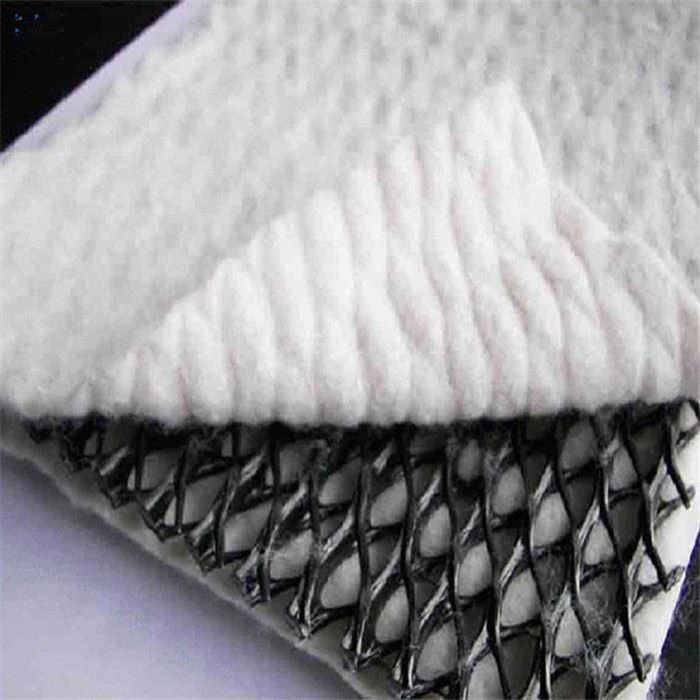
Before delving into the connection methods, it's crucial to have a basic understanding of Drainage Geocomposites. These materials typically consist of a core, which provides the drainage function, and one or two layers of geotextile, which act as filters to prevent soil particles from clogging the drainage channels. There are different types of Drainage Geocomposites available, including Two Dimensional Composite Drainage Geonet, Three Dimensional Composite Drainage Network, and Tri Planar Geonet Composite with Geotextile. Each type has its own unique characteristics and is suitable for different applications.
Preparation Before Connection
- Site Inspection: Conduct a thorough inspection of the installation site to ensure that the surface is clean, level, and free of any sharp objects or debris that could damage the Drainage Geocomposite.
- Material Selection: Choose the appropriate type and size of Drainage Geocomposite based on the specific requirements of the project, such as the expected water flow rate, soil conditions, and installation location.
- Tools and Equipment: Gather all the necessary tools and equipment for the connection process, such as scissors, staplers, adhesive, and welding machines.
Connection Methods
Overlapping
Overlapping is one of the simplest and most commonly used methods for connecting Drainage Geocomposite. This method involves placing one piece of the material over another with a certain overlap width.
- Determine the Overlap Width: The overlap width should be determined based on the type of Drainage Geocomposite and the project requirements. Generally, an overlap of 150 - 300 mm is recommended for most applications.
- Align the Pieces: Carefully align the two pieces of Drainage Geocomposite to ensure that the drainage channels are properly connected and the geotextile layers are in contact.
- Secure the Overlap: Use staples, adhesive, or other suitable fasteners to secure the overlap. Staples should be evenly spaced along the overlap area to prevent the material from separating. Adhesive can be applied to the geotextile layers to provide a more permanent bond.
Welding
Welding is a more advanced method for connecting Drainage Geocomposite, especially for materials with a plastic core. This method creates a strong and seamless connection between the pieces.
- Select the Welding Method: There are two main types of welding methods for Drainage Geocomposite: hot air welding and extrusion welding. Hot air welding uses hot air to melt the plastic core of the material, while extrusion welding involves melting a plastic rod and applying it to the joint.
- Prepare the Welding Equipment: Ensure that the welding equipment is in good working condition and set to the appropriate temperature and speed according to the type of material.
- Clean the Joint Area: Clean the joint area of the two pieces of Drainage Geocomposite to remove any dirt, dust, or moisture that could affect the welding quality.
- Perform the Welding: Follow the manufacturer's instructions to perform the welding process. For hot air welding, move the welding nozzle along the joint at a constant speed, melting the plastic core and fusing the two pieces together. For extrusion welding, feed the plastic rod into the welding gun and apply it to the joint while moving the gun along the seam.
- Inspect the Weld: After welding, inspect the weld to ensure that it is strong and free of any defects, such as holes or weak spots.
Sewing
Sewing is a suitable method for connecting Drainage Geocomposite with a geotextile layer. This method provides a flexible and durable connection.
- Choose the Sewing Thread: Select a strong and UV-resistant sewing thread that is compatible with the geotextile material.
- Set up the Sewing Machine: Adjust the sewing machine to the appropriate stitch length and tension for the geotextile.
- Align the Pieces: Align the two pieces of Drainage Geocomposite and start sewing along the edge of the overlap. Make sure to sew through both layers of the geotextile to ensure a secure connection.
- Finish the Sewing: Once the sewing is complete, trim any excess thread and inspect the seam for any loose stitches.
Quality Control
- Visual Inspection: After connecting the Drainage Geocomposite, conduct a visual inspection to ensure that the connection is secure, the drainage channels are not blocked, and the geotextile layers are properly aligned.
- Leak Testing: If possible, perform a leak test to check the integrity of the connection. This can be done by applying water to the connected area and observing if there are any leaks.
- Documentation: Keep detailed records of the connection process, including the connection method used, the overlap width, and the inspection results. This documentation can be useful for future reference and quality assurance.
Conclusion
Connecting different pieces of Drainage Geocomposite is a critical step in ensuring the proper functioning of the drainage system. By choosing the appropriate connection method, following the correct procedures, and conducting thorough quality control, you can achieve a reliable and long-lasting connection. As a Drainage Geocomposite supplier, I am committed to providing high-quality products and professional technical support to help you with your projects. If you have any questions or need further assistance in selecting the right Drainage Geocomposite or connecting the pieces, please feel free to contact us for a procurement discussion. We look forward to working with you to meet your drainage needs.
References
- ASTM D6706 - Standard Specification for Geosynthetic Drainage Composites
- Koerner, R. M. (2012). Designing with Geosynthetics. Pearson.
- Giroud, J. P., & Bonaparte, R. (1989). Geotextiles and Geomembranes in Civil Engineering. Elsevier.